
Emergency water removal in League City
Standing water moves fast through carpet, drywall, and cabinets, and every hour changes what a crew can save.
Call For Help(281) 903-551424/7 emergency line. Free estimates from local pros.
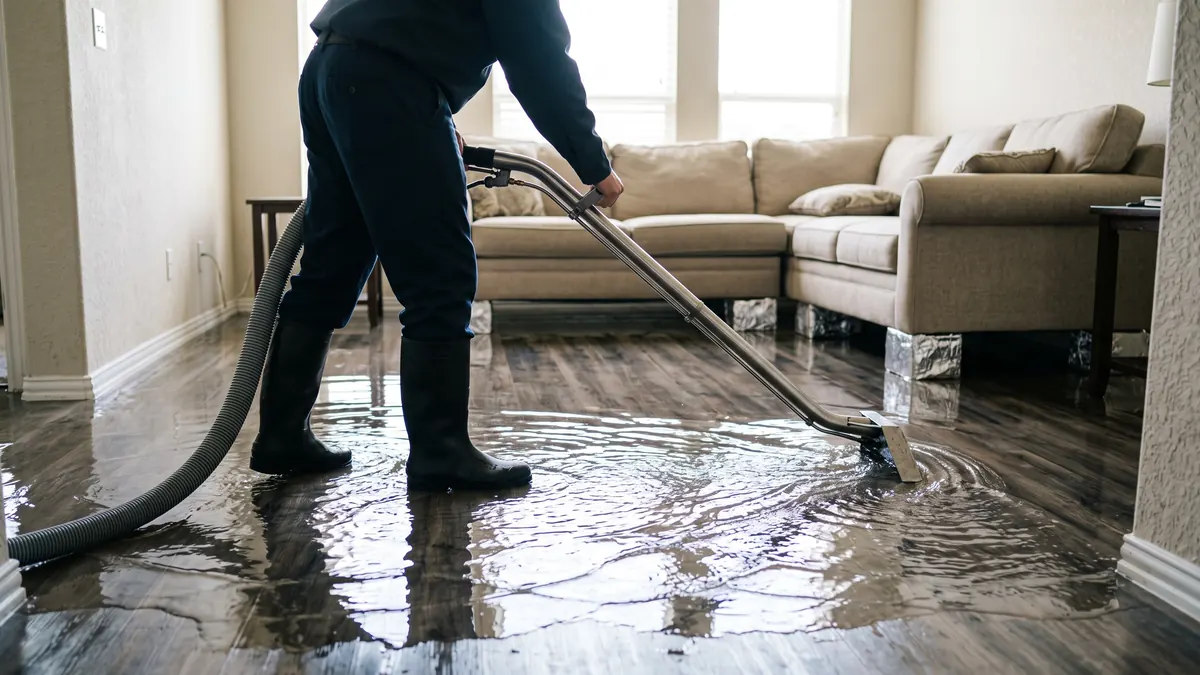
Standing water doesn’t stay put on the surface for long. It moves into carpet pad, drywall, and cabinet bases within the first hour, and every material soaks at its own speed. Here’s the order it usually happens in, and what actually stops it.
Carpet and pad go first
Carpet holds water like a sponge sitting on the floor, and the pad underneath holds even more. A wet-vac pulls surface water off the top of the carpet, but it leaves most of what’s soaked into the pad behind. That’s the difference an extraction wand makes: it pulls water up through both layers at once, not just what’s sitting on top.
Padding that’s stayed wet more than a day or two usually gets pulled and replaced rather than dried in place. Carpet itself can sometimes be saved if the water was clean and the pad underneath comes out.
Drywall pulls water sideways and up
Water doesn’t sit still at the bottom of a wet wall. Drywall wicks moisture upward through its paper facing, the way a paper towel pulls water up a glass. A wall that got two inches of standing water against it can show damp drywall a foot or more above that line within a day.
Baseboards and cabinet toe-kicks are usually the first places this shows. They sit right at floor level, and they trap water behind them where it can’t evaporate on its own. A removal crew checks behind both, even when the wall above looks dry.
What a removal visit actually does
A real visit follows three stages. First, standing water comes out with pumps or extraction equipment, not a shop-vac. Then a moisture meter maps how far the water actually traveled into walls, flooring, and framing, since what you can see rarely matches what got wet. Only after that does drying equipment go in, aimed at what the mapping found, not just the obvious wet spot.
Cut the water, then the power
If a supply line or appliance is still running, get to the shutoff valve and close it. Most houses have a main shutoff near the water meter, plus smaller valves at sinks, toilets, and the water heater. If standing water is anywhere near an outlet or a breaker panel, don’t wade through it. Cut power to that area at the panel instead, or wait for someone who can do it safely.
What to move first
Move what won’t hurt you to lift: rugs, boxes off the floor, furniture legs propped up off wet carpet on foil or blocks. Leave anything heavy, and leave anything electrical plugged into a wet outlet alone. A quick photo of the standing water before you start moving things helps later if you end up filing a claim.
Some materials buy you less time than others
The general guidance is to get everything dry within a day or two. That number hides a real difference between materials, though. Carpet pad and drywall paper start feeding mold sooner than solid wood trim or tile grout, because they hold more water in less space. A soaked carpet pad left overnight is already working against you in a way a damp baseboard isn’t yet. That’s why a removal visit treats the porous, absorbent stuff as the priority, not the whole house evenly.
What to say when you call
You don’t need the cause figured out before you call us. Tell us where the water is, how long it’s been sitting, and whether it’s still moving. That’s enough for us to get a local company headed your way and a water damage repair plan started. If you haven’t made it past the first hour yet, the what to do guide shows what comes next, and the drying time guide gets specific about how long the equipment actually needs to stay.
Common questions
Can someone come out in the middle of the night?
Yes, we answer day and night, because water damage doesn't wait for a better time. Once you call, we get a local company started on your job right away. How fast they physically arrive depends on their schedule and how far out you are, so nobody can promise an exact minute.
When does a house actually count as dry?
Not just when the carpet feels dry underfoot. Materials like drywall and subfloor can hold water well after the surface feels normal, so a crew checks with a moisture meter before anyone calls the job finished. The drying time page has more on why that takes longer than people expect.
Will we need to clear out during the drying process?
Usually not for a small area, and yes if the damage is bigger. A single wet room with equipment running is livable for most people. A whole first floor with air movers and dehumidifiers going around the clock is loud and warm, so some families choose to stay elsewhere until it's done. Either way, that's your call.
Related pages
Appliance Leak Cleanup
Water heaters, washer hoses, and dishwasher lines all age out eventually, and none of them give much warning when they finally fail.
Learn more →Burst Pipe Cleanup
What to shut off first, why League City's 2021 freeze still matters, and what happens once the water's off.
Learn more →Ceiling Water Damage
Roof leaks, AC overflow, and upstairs plumbing all leave the same kind of ceiling stain, so telling them apart matters before anyone starts cutting.
Learn more →Commercial Water Damage
A flooded office or storeroom isn't a bigger version of a home loss. It's a different problem, measured in days closed, not gallons.
Learn more →Talk to a local pro now
We answer 24/7. One call gets a League City crew moving on your water damage, with a free estimate and help with your insurance claim.
Call For Help(281) 903-5514Free estimates. No obligation to hire.